

Introduction
We live in a world where technology is growing very fast. Today, machines can talk to us, recognize our faces, suggest videos we like, and even help doctors find diseases. The reason behind all this is Artificial Intelligence (AI).
As students, it is very important to understand AI because it is not just a future technology—it is already part of our present. AI will play a major role in careers, education, healthcare, business, and daily life.
This blog is written only for educational purposes, especially for students. The language is simple, the explanations are clear, and no technical background is required. By the end of this blog, you will clearly understand what AI is, how it works, where it is used, and why learning AI is important.
What is Artificial Intelligence?
Artificial Intelligence, or AI, is a technology that allows machines to think, learn, and make decisions like humans.
Humans have natural intelligence. We can learn from books, teachers, and experiences. AI tries to give machines a similar ability, but using data and computer programs.
In simple words:
Artificial Intelligence means making machines smart.
For example:
- When a calculator solves problems, it follows fixed rules.
- But when YouTube suggests videos based on your interest, that is AI.
AI systems do not think like humans, but they learn patterns from data and use them to give results.
For example:
- When YouTube suggests videos you actually like
- When Google Maps shows the fastest route
- When your email automatically filters spam
None of these machines are “thinking” like humans—but they are learning patterns, just like we do.
Why Has AI Become So Important?
The world today runs on data. Every click, search, photo, message, and purchase creates data. Humans alone cannot analyze such massive information. This is where AI becomes powerful.
AI is important because it can:
- Work faster than humans
- Handle huge amounts of data
- Reduce mistakes
- Do boring or repetitive tasks without getting tired
In simple words, AI saves time, effort, and energy, allowing humans to focus on more creative and meaningful work.
How Does Artificial Intelligence Work?
AI works mainly using data, algorithms, and learning. Let us understand this step by step.
1. Data
Data is information. It can be text, images, videos, numbers, or voice.
AI learns from data just like students learn from books.
Example:
To teach AI to recognize handwritten numbers, we show it thousands of examples of handwritten digits.
2. Algorithms
Algorithms are instructions that tell the computer what to do with the data.
They help AI find patterns and relationships.
Think of algorithms as rules or methods that guide learning.
3. Learning from Experience
AI improves its performance by learning from mistakes.
The more data it gets, the better it becomes.
This process is known as Machine Learning.
Different Types of AI
1. Narrow AI – The AI We Use Today
This is the most common form of AI. It is designed to do one specific job and do it well.
Examples:
- Voice assistants
- Face recognition
- Recommendation systems
This AI is smart—but only within its limits. It cannot think beyond its task.
2. General AI – Like a Human Brain
This type of AI would be able to think, learn, and understand anything a human can.
It could solve problems, learn new skills, and make independent decisions.
Right now, this AI does not exist. It is still a dream for scientists.
3. Super AI – Beyond Human Intelligence
This is a future concept where AI becomes smarter than humans in every way—logic, creativity, emotions, everything.
For now, this exists only in movies and imagination.
Important AI-Related Terms
Machine Learning (ML)
Machine Learning is a part of AI where machines learn automatically from data without being programmed again and again.
Examples:
- Email spam detection
- Exam result prediction
- Recommendation systems
Deep Learning
Deep Learning is a more advanced form of machine learning. It is inspired by the human brain and uses neural networks.
Examples:
- Speech recognition
- Face recognition
- Self-driving cars
Natural Language Processing (NLP)
NLP helps machines understand human language.
Examples:
- Chatbots
- Voice assistants
- Language translation
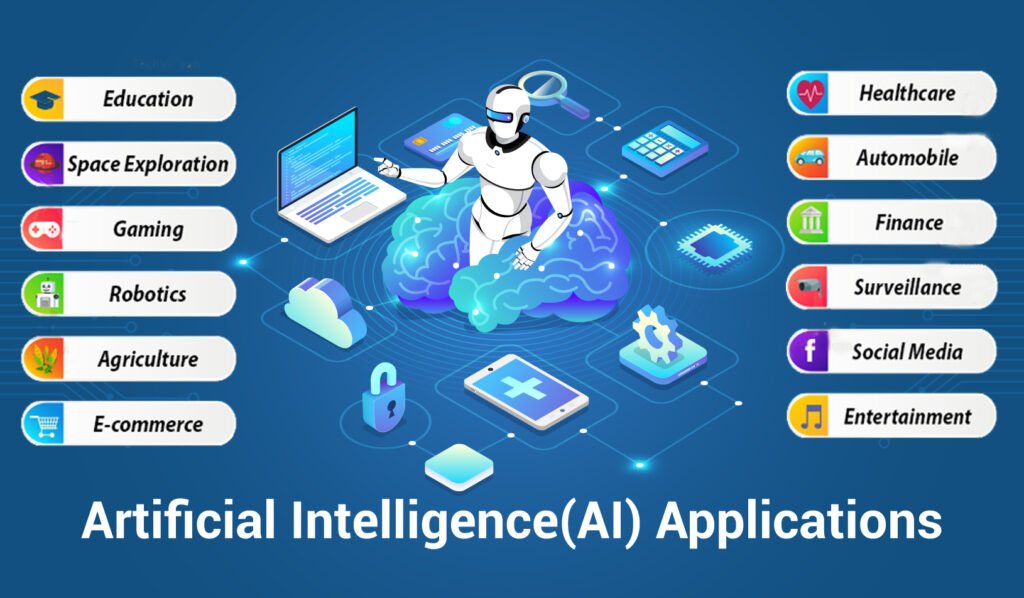
AI in Our Daily Life (More Than You Realize)
You may not notice it, but AI is already around you.
In Healthcare
- Helps doctors detect diseases early
- Analyzes medical reports
- Assists in drug discovery
In Education
- Personalized learning apps
- Online tutors
- Automatic exam checking
In Banking
- Detects fraud
- Manages customer queries
- Helps approve loans
In Entertainment
- Suggests movies and songs
- Improves photo and video quality
- Creates realistic game characters
AI is not replacing humans—it is supporting them.
Advantages of Artificial Intelligence
AI offers many benefits, especially in education and research.
- Saves time
- Improves accuracy
- Works continuously
- Helps in better decision-making
- Supports teachers and students
When used properly, AI becomes a powerful learning tool.
Limitations and Challenges of AI
AI also has some limitations that students should understand.
- AI cannot think creatively like humans
- It depends completely on data
- It may cause job changes in the future
- Privacy and data safety issues
That is why human control and ethical use of AI are very important.
The Future of AI for Students
In the future, AI will create many new opportunities.
Students with AI knowledge can work in fields like:
- Data Science
- Healthcare technology
- Education technology
- Research and innovation
AI will not replace humans, but humans who understand AI will replace those who don’t.
Conclusion
Artificial Intelligence is an important part of modern education. It helps machines learn, analyze, and make decisions using data. For students, understanding AI means being prepared for the future.
AI is not something to fear. It is a tool created by humans to support learning, growth, and progress. By learning AI concepts early, students can become smarter, more confident, and more capable in a technology-driven world.
Learning AI today is an investment in a smarter tomorrow.

Nice explanation