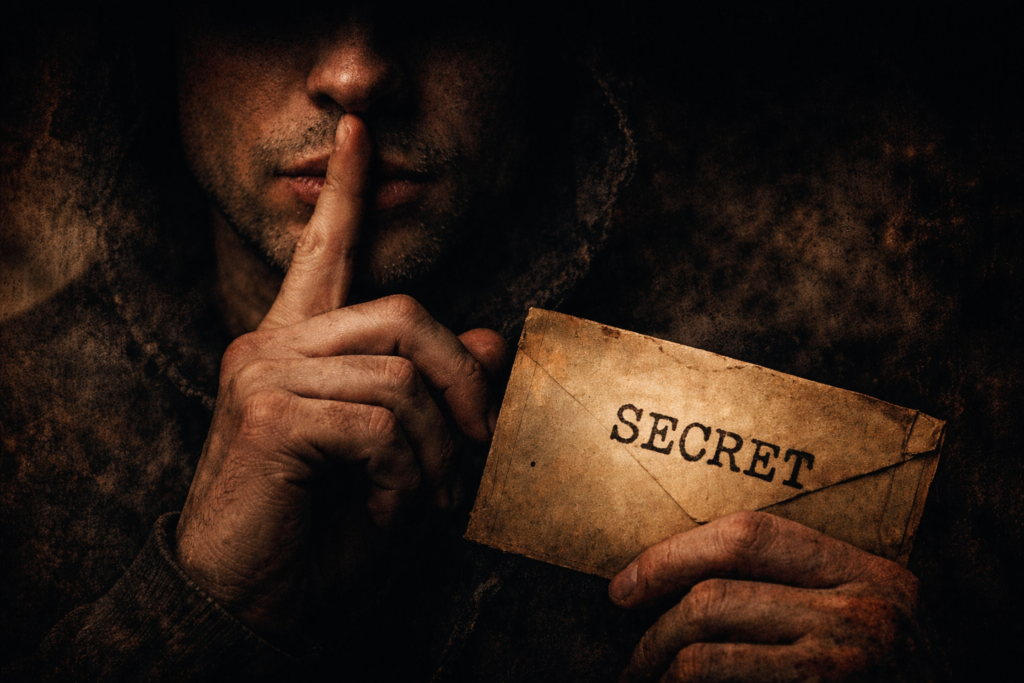
The Dark Psychology Behind Hidden Truths
Humans don’t just keep secrets.
They attach themselves to them.
A secret is not only hidden information—it is power, identity, and emotional leverage wrapped into silence. From harmless lies to life-altering truths, secrecy is deeply embedded in human behavior. And the uncomfortable truth is this: people don’t keep secrets only to protect others. Very often, they keep secrets to protect themselves.
Understanding why humans love secrets means understanding the darker corners of the human mind.
Secrets Create a Sense of Power
At its core, a secret is control over information. And control has always been one of the strongest human desires.
When someone knows something others don’t, it creates a quiet psychological advantage. The person holding the secret decides when it will be revealed—or if it ever will be. This decision-making power, even in small amounts, triggers a sense of dominance and security.
This is why people often hold onto secrets even when honesty would make life easier. The fear of losing control feels worse than the burden of silence.
Secrets Make People Feel Superior
There is a subtle ego boost in secrecy that few people like to admit.
Knowing a secret separates a person from the crowd. It creates an invisible boundary between “those who know” and “those who don’t.” This separation feeds the ego and strengthens self-importance.
In dark psychology, this is closely linked to status behavior. Humans are wired to seek hierarchy, and secrets quietly place someone higher in that hierarchy—at least in their own mind.
Secrets Build Dangerous Emotional Bonds
Secrets are often mistaken for intimacy.
When someone shares a secret, it creates emotional closeness, trust, and loyalty. But this bond can quickly turn toxic. Secrets can trap people in relationships built on silence, guilt, or fear of exposure.
This is why manipulators use secrets as weapons. A shared secret becomes leverage. The listener feels responsible, involved, and emotionally tied—sometimes against their own best interest.
Not all secrets bring connection. Some create cages.
Secrets Protect the Hidden Self
Every human wears a social mask. Behind that mask lives a private self filled with thoughts, regrets, desires, and fears that may never be shared.
Secrets protect this hidden identity. They act as psychological armor, shielding people from judgment, rejection, or shame. For many, secrecy is not deception—it is survival.
This is especially true in a society where vulnerability is often punished rather than respected.
The Mental Cost of Keeping Secrets
While secrets offer power and protection, they also demand a price.
The human brain is not designed to carry too many hidden truths. Over time, secrecy creates stress, anxiety, and emotional fatigue. The mind is constantly alert, filtering words and behaviors to avoid exposure.
This internal pressure explains why secrets feel heavy, even when no one is asking questions.
Final Thoughts
Humans love secrets because secrets give control, identity, and emotional influence. They make people feel powerful, special, and protected. But they also reveal a darker truth: much of human behavior is driven by fear—fear of judgment, loss, and vulnerability.
Secrets are not just things we hide.
They are reflections of who we are afraid to be seen as.